


Real Hair Wigs Repair: Easy DIY Solutions That Work
- Sofia Jones
- Feb 17
- 4 min read


Your favorite real hair wigs looking a bit worse for wear? Tangled strands, shedding wefts, or frizzy ends don't mean it's time to toss them—many real human hair wigs can be revived with simple at-home fixes. In this guide, you'll learn proven DIY repair techniques for real hair wigs for women, from detangling to restyling, saving you money while extending their life. Whether you own sleek real hair lace front wigs or voluminous pure natural wigs, these steps restore shine and bounce effortlessly.
Why Repair Real Hair Wigs Instead of Replacing Them?
Real hair wigs are an investment, often lasting 1-3 years with care, thanks to their authentic texture and heat-styling versatility. Wear and tear like matting from sweat, improper storage, or over-washing is common, but repairable. Fixing them yourself preserves the wig's original cut and color match, avoiding the hassle of finding a perfect replacement. Plus, real hair wigs for women regain that fresh-out-of-the-box feel, boosting confidence without breaking the bank.
Common Issues with Real Hair Lace Front Wigs
Real hair lace front wigs shine for their natural hairlines, but lace tears, knot slippage, or edge frizz crop up fast. Pure natural wigs—unprocessed Remy varieties—tangle less but still suffer from dryness in humid climates. Early intervention prevents total ruin, keeping your real human hair wigs versatile for daily wear or special events.
Essential Tools for DIY Real Hair Wigs Repair
Stock a basic kit:
Wide-tooth comb or wig brush
Mild wig shampoo and deep conditioner
Sewing needle/thread matching hair color
Sharp fabric scissors
Handheld steamer or blow dryer (low heat)
Leave-in serum or argan oil
Wig stand or mannequin head
These everyday items tackle 90% of problems in real hair wigs for women.

Step-by-Step DIY Repairs for Real Human Hair Wigs
1. Detangling and Washing: The Foundation Fix
Matting starts every repair. Fill a basin with lukewarm water and wig shampoo; soak your real hair lace front wigs for 10 minutes. Gently swish—never rub. Rinse with cool water.
Apply conditioner from roots to tips, combing section-by-section from ends up. For stubborn knots in pure natural wigs, use diluted fabric softener spray (1:4 water). Air-dry 80% before blow-drying on cool.
Pro Pointers:
Detangle daily with spray to prevent buildup.
Wash every 7-10 wears.
2. Fixing Shedding and Loose Wefts
Wefts pulling from the cap? Turn the real human hair wigs inside out. Thread a curved needle with double-stranded monofilament or hair-colored thread. Stitch loose sections in a zigzag pattern, knotting securely every inch.
For major gaps, glue a mesh patch inside with fabric adhesive, then sew over. This revives real hair wigs for women weakened by adhesive installs.
Quick Tips:
Reinforce high-friction nape areas proactively.
Test thread tension to avoid puckering.
3. Repairing Frizz and Split Ends
Frizz hits pure natural wigs hard post-heat styling. Trim splits with sharp scissors: Section hair, hold straight, snip vertically 1/4 inch at a time—no more than 1/2 inch total.
Steam vertically from 6 inches away to seal cuticles. Follow with serum-rubbed fingers for shine. Real hair lace front wigs benefit from edge brushing with boar bristle.
Heat Revival Pointers:
Flat-iron at 300°F max with protectant.
Argan oil mists tame flyaways instantly.
4. Restoring Lace and Hairline on Real Hair Lace Front Wigs
Torn lace? Cut a matching piece from wig remnants, sew or glue over damage. For bleached knots showing, dab concealer or restyle forward.
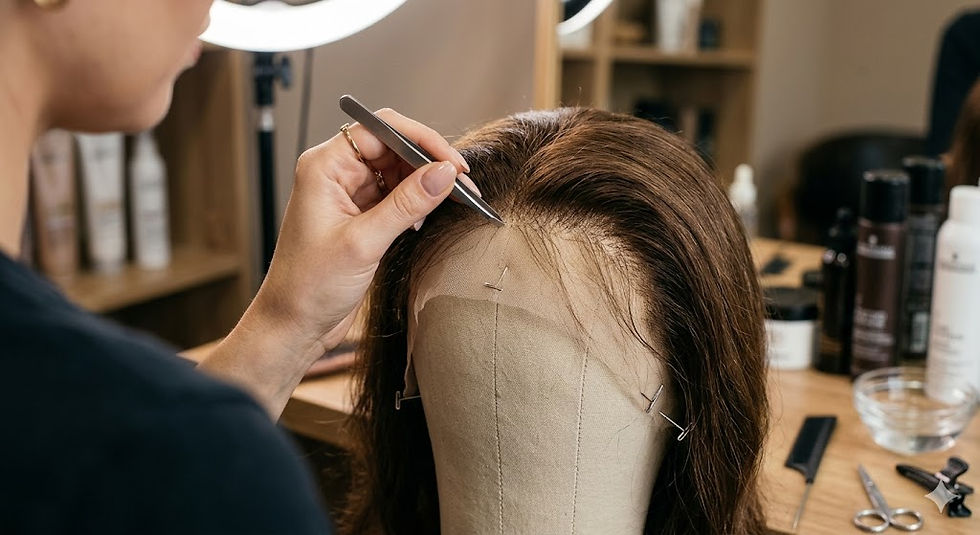
Pluck sparse areas with tweezers for density match. Melt edges by pressing with heated spoon (wrapped in cloth) for seamless scalp illusion.
Lace-Saving Steps:
Avoid ripping during removal—peel slowly.
Store lace-up to prevent stretching.
5. Reshaping and Restyling Pure Natural Wigs
Pure natural wigs lose curl memory? Deep condition overnight, then finger-roll damp sections onto flexi-rods. Air-dry or low-heat diffuse.
For waves, braid loosely post-wash. Blow-dry real hair wigs for women over a round brush for volume, using clips to set.
Style Hacks:
Hot water dip revives waves (submerge 30 seconds).
Rollers add root lift without damage.
6. Handling Heat Damage and Burnt Spots
Overheated strands? Trim charred tips precisely. Blend with extensions if needed: Sew matching wefts into thinning spots.
Protein treatment (every 6 weeks) rebuilds strength—mix yogurt, egg, and honey, apply 20 minutes.

Pros and Cons of DIY Real Hair Wigs Repair
Pros:
Cost-effective (under $20 vs. $100 salon).
Custom control for real hair lace front wigs.
Extends life of pure natural wigs by months.
Satisfying, empowering process.
Cons:
Learning curve for sewing novices.
Risk of over-trimming.
Time-intensive (1-3 hours per session).
Irreversible for severe cap tears.
Weigh against professional restyling for heirloom pieces.
FAQs: Troubleshooting Real Human Hair Wigs Repairs
How often should I repair real hair wigs for women?
Bi-monthly maintenance; full repairs every 3-6 months.
Can I dye real hair lace front wigs during repair?
Yes, post-detangle with semi-permanent; test strand first.
Why do pure natural wigs shed after repair?
Loose knots—re-secure with bonding glue dots.
Is steaming safe for all real human hair wigs?
Yes, under 212°F; hold distance to avoid scorching.
How to prevent future damage in real hair wigs?
Silk storage, weekly conditioning, low-heat styling.
What's the lifespan post-repair?
6-18 more months with care.
Can beginners fix shedding wefts?
Start with fabric glue; advance to sewing.
Expert Insights on Long-Term Care
Stylists recommend quarterly protein masks for real human hair wigs to combat porosity. Store on stands in breathable bags, away from sunlight. Weekly serum applications keep pure natural wigs hydrated, reducing repair frequency by 50%.

Conclusion
Reviving real hair wigs through DIY repairs breathes new life into your collection, from sleek real hair lace front wigs to bouncy pure natural wigs. Master detangling, sewing, steaming, and trimming to sidestep replacements and customize endlessly. With patience, your real human hair wigs stay flawless longer—proving easy fixes work wonders for everyday glamour.


Comments